In a landmark ruling, a High Court in Nigeria has banned the Inspector General of Police (IGP) and all members of the Nigeria Police Force from enforcing the controversial tinted glass permit policy on vehicles across the country.
The judgment, delivered on Wednesday, December 17, 2025, marks a significant victory for motorists and car owners nationwide, effectively halting what many have criticized as an exploitative practice.
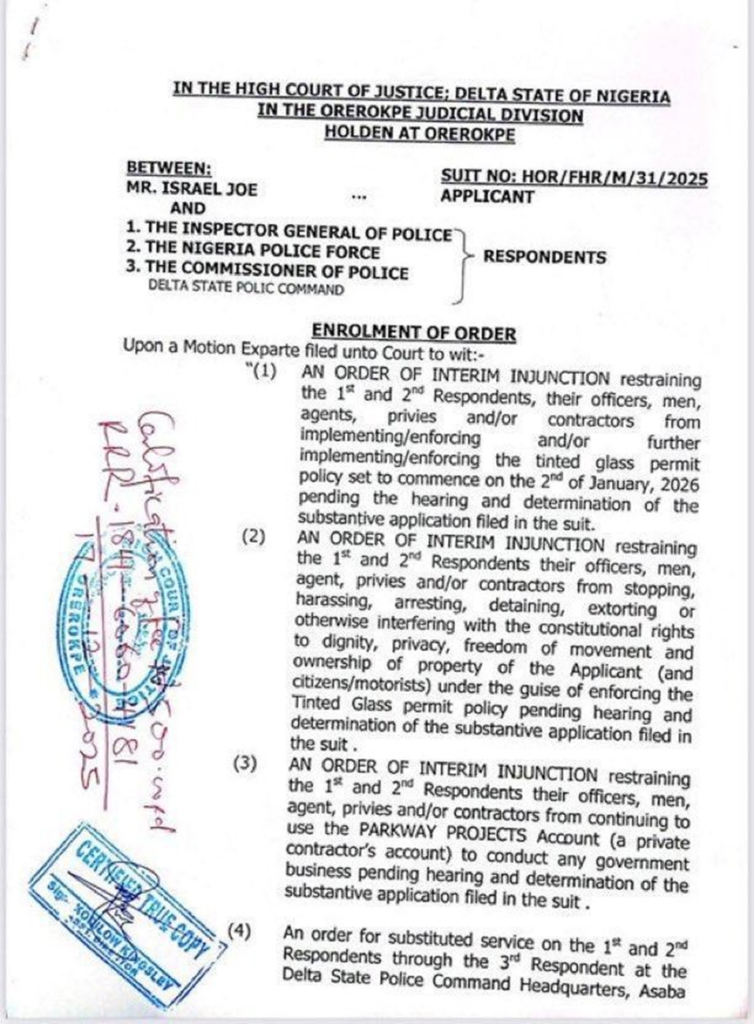
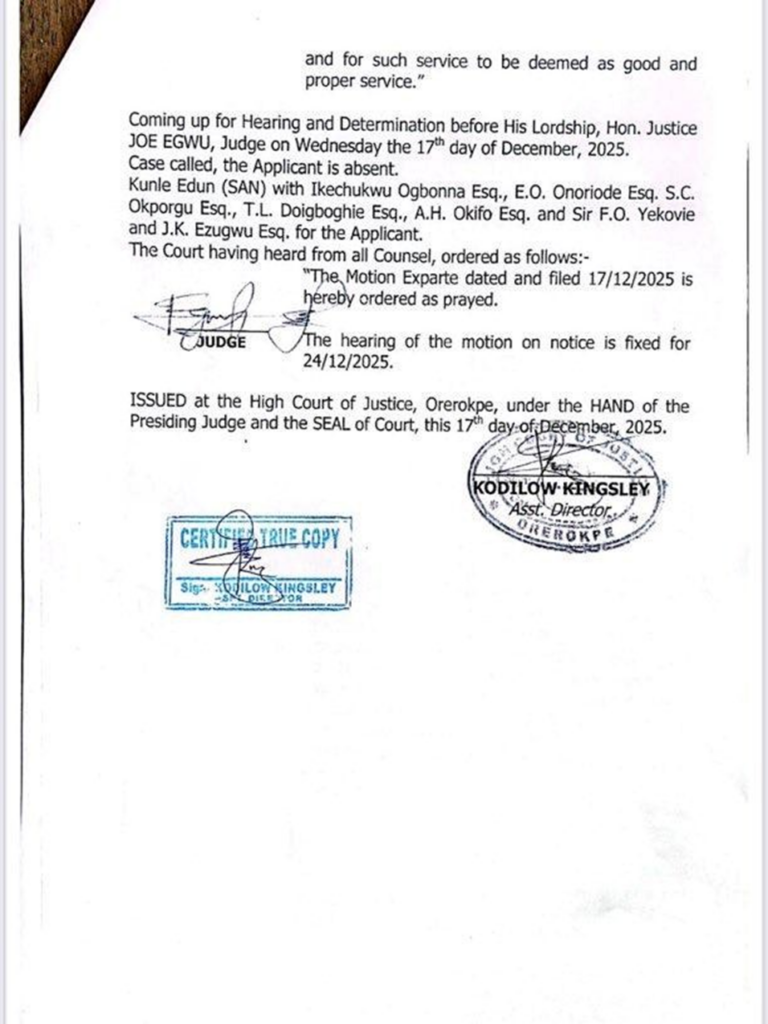
The court’s order explicitly prohibits police officers from applying or enforcing the policy, which required drivers to obtain permits for vehicles with tinted glasses.
This decision comes amid growing public outcry over frequent police stops, harassment, and extortion at checkpoints, where officers often demand bribes under the guise of verifying tint permits. Legal experts hail the ruling as a bold affirmation of citizens’ rights to privacy and freedom of movement.
With immediate effect, the judgment shields Nigerian citizens, drivers, and vehicle owners from any police interference related to tinted glasses.
No longer can officers stop, arrest, or demand permits from motorists solely on suspicion of non-compliance.
The nationwide scope of the order ensures uniformity, preventing regional variations in enforcement that previously plagued the system.
The tinted glass permit policy, introduced years ago ostensibly for security reasons, has long been a flashpoint for controversy.
Critics argued it infringed on fundamental rights under the 1999 Constitution, including Section 35 on personal liberty and Section 41 on freedom of movement.
Human rights groups, such as the Nigerian Bar Association and Amnesty International Nigeria, have repeatedly condemned it as a tool for corruption, with countless reports of arbitrary arrests and financial demands.
This ruling builds on a series of judicial interventions challenging police overreach. In recent years, courts have nullified similar practices, including excessive roadblocks and unlawful searches.
The High Court’s decision reinforces the judiciary’s role as a bulwark against executive excesses, particularly in policing, where accountability remains a persistent issue.
Sources close to the case indicate the suit was filed by affected citizens seeking broader reforms in law enforcement conduct.
Policemen nationwide now face legal repercussions for disregarding the order, including potential contempt charges.
The Inspector General’s office has yet to issue an official statement, but compliance is mandatory under the court’s directive.
Motorists’ rights advocates predict a sharp decline in extortion-related complaints, urging the police to redirect resources toward genuine security threats like armed robbery and kidnapping.
As Nigeria grapples with infrastructural and governance challenges, this judgment underscores the power of the courts in promoting rule of law.
It offers relief to everyday drivers in states like Lagos, Imo, and Abuja, where tinted vehicles are common for privacy and sun protection.
Stakeholders call on the National Assembly to enact supportive legislation, ensuring the policy’s permanent abolition.
The ruling arrives at a pivotal time, just days before the holiday season, when police checkpoints typically intensify.
By curbing this practice, the court not only safeguards economic productivity—lost hours and money from stops add up nationally—but also fosters trust between citizens and law enforcement.
Legal analysts however anticipate appeals, though the injunction’s strength makes reversal unlikely without compelling evidence.