Residents and road users in Owerri have raised concerns over lingering refuse heaps along Tetlow Road and adjoining streets, barely 48 hours after the monthly environmental sanitation exercise observed across Imo State.
Photographs taken between 12:15 p.m. and 12:35 p.m. on Monday, March 2, 2026, showed mounds of waste at key intersections, including School Road by Njiribeako Street, Tetlow Road by Ajoku Street, Tetlow Road by School Road, Tetlow Road by Christ Church Street, and Tetlow Road by Lagos Street.
Tetlow Road, located less than two kilometres from the Imo State Government House, is one of the busiest commercial corridors in the capital city.
The road connects major streets such as Bank Road, Njemanze Street, Lagos Street, School Road, Christ Church Street, Ajoku Street, Osuji Street, Wetheral Road, Douglas Road, Mere Street, Uratta Street, and extends toward Mbaise Road. It houses markets, offices, retail outlets, hospitality businesses and the popular old stadium, making it a critical transport and commercial artery.
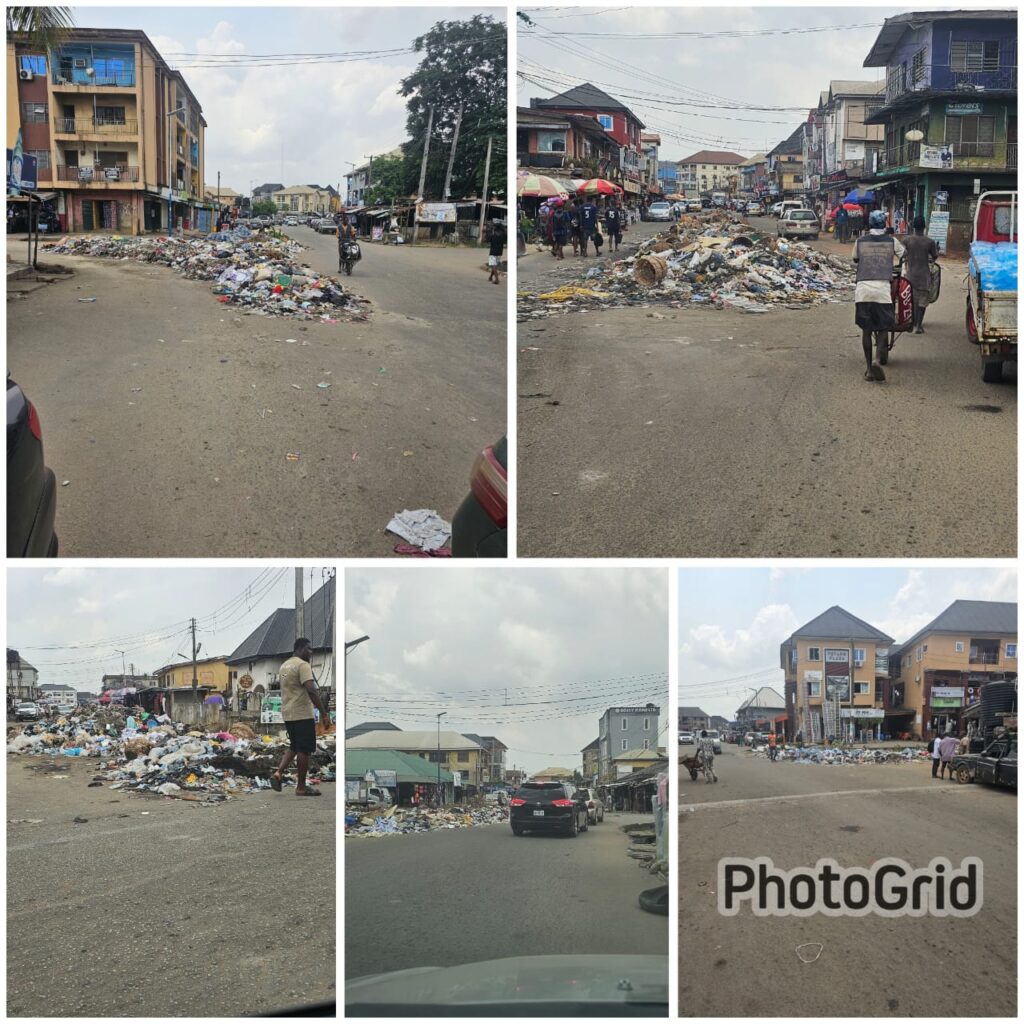
Despite the sanitation exercise conducted on Saturday, February 28, during which movement was restricted across parts of the state, refuse heaps were still visible at strategic junctions by Monday afternoon.
Motorists were seen navigating around waste piles positioned close to turning points and carriageway shoulders.
Chinedu Agu, a lawyer and activist based in Owerri, described the situation as a recurring pattern following monthly sanitation exercises.
According to him, similar incidents were recorded in January when refuse collected during sanitation remained on roadsides for days before evacuation.
He questioned why waste gathered during the exercise is not evacuated simultaneously, noting that leaving refuse heaps at intersections for extended periods undermines the objective of sanitation.
“In functioning jurisdictions, sanitation is achieved through structured waste logistics rather than ceremonial shutdowns,” Agu said, citing examples from the United Kingdom where local councils manage refuse collection through fixed schedules without restricting movement.
He also raised concerns about the enforcement of movement restrictions during sanitation hours, arguing that such measures should align with constitutional provisions guaranteeing freedom of movement.
Under the Fourth Schedule of the 1999 Constitution of the Federal Republic of Nigeria, waste disposal and environmental sanitation fall within the responsibilities of Local Government Councils. Agu questioned the extent of state-level control over sanitation exercises and called for greater local government autonomy in waste management administration.
He recommended structured weekly street-based waste collection, real-time evacuation protocols during sanitation exercises, transparent contractor monitoring, and the designation of Tetlow Road as a model sanitation corridor due to its proximity to Government House.
As of press time, there was no official response from relevant environmental authorities regarding the delay in refuse evacuation along Tetlow Road.
Residents have urged authorities to improve waste logistics to ensure that sanitation exercises result in sustained cleanliness across the city.