Insecurity in Imo State has reached a critical point, leaving once-thriving communities deserted and economic life severely disrupted.
Nowhere is this more evident than in Orsu Local Government Area, where the popular Eke Ututu market—once a bustling commercial hub—has been reduced to a ghost of its former self.
Stalls that previously hosted traders from across the South-East now stand empty, as residents flee persistent violence, fear, and uncertainty.
The mass displacement of residents from Orsu and surrounding communities underscores the human cost of prolonged insecurity.
Families have abandoned homes, farmlands, and businesses, seeking refuge in safer areas within and outside the state.
This exodus has not only fractured community life but has also deepened poverty levels, as displaced persons struggle to rebuild livelihoods in unfamiliar environments without adequate government support.
Economically, the consequences are far-reaching. Local markets such as Eke Ututu serve as critical arteries for rural commerce, agricultural exchange, and small-scale enterprise.
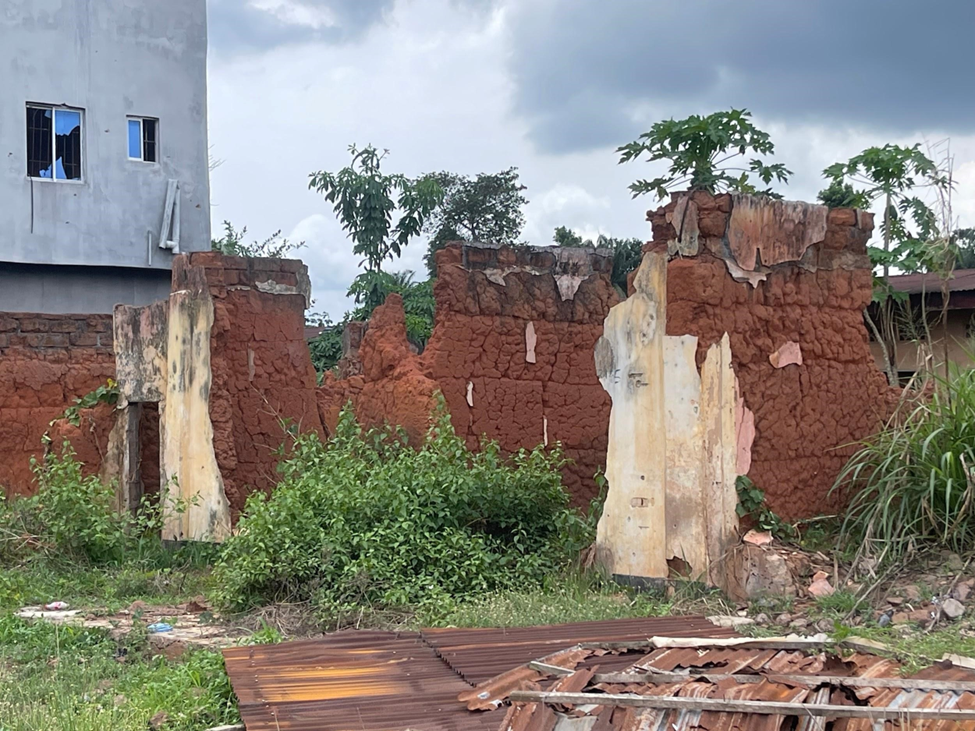
Their collapse disrupts supply chains, reduces internally generated revenue for local governments, and weakens food security across the region.
Farmers who once depended on these markets to sell produce now face losses, while traders grapple with dwindling income, contributing to a broader economic slowdown in Imo State.
Beyond economics, the social fabric of affected communities is steadily eroding. Schools in volatile areas have either shut down or operate intermittently, depriving children of consistent education.
Healthcare delivery has also been compromised, as health workers avoid high-risk zones. The psychological toll on residents—marked by trauma, fear, and uncertainty—continues to grow, raising concerns about long-term societal stability if the insecurity persists.
Despite these realities, questions remain about the effectiveness of government spending on security in Imo State.
Over the past three years, successive state budgets have included allocations for security operations, logistics support, and intelligence gathering, often running into billions of naira under broad “security votes” and related provisions.
However, the opacity surrounding these expenditures makes it difficult to assess their impact.
While funds are consistently appropriated, there is limited publicly available data demonstrating how these resources have translated into improved safety for communities like Orsu.
Without these, markets like Eke Ututu may remain abandoned symbols of a deeper governance failure, rather than reclaimed centers of economic and social life.
Critics argue that the persistence—and in some areas, escalation—of insecurity points to gaps in both strategy and accountability.
The absence of detailed reporting on security spending raises concerns about whether funds are being efficiently utilized or diverted.
Moreover, the lack of measurable outcomes—such as reduced incidents of violence or successful community resettlement—suggests that current approaches may be insufficient or poorly coordinated.
Holding leaders accountable is therefore essential to reversing the current trajectory. Transparency in security-related expenditures, regular public briefings on progress, and independent oversight mechanisms are critical steps toward rebuilding trust.
Citizens, civil society organizations, and the media must continue to demand clarity on how public funds are used, especially in a context where lives and livelihoods are at stake.
Ultimately, restoring peace in Imo State requires more than budgetary allocations—it demands strategic leadership, community engagement, and sustained political will.